A Unique New Voice: Michael Maniaci
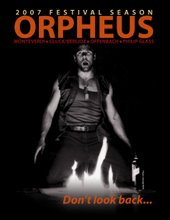
 Male soprano Michael Maniaci has been acclaimed throughout the world for his otherworldly voice. He has sung on many American stages, as well as in Europe. This season, he plays Orphée in Glimmerglass' production of Orphée et Eurydice, a beautiful production populated with extraordinary voices. However, this extraordinary voice has an unusual story. Through a lucky coincidence, Michael's voice never changed.
"My larynx is smaller. My cords didn't lengthen and thicken as much as they could have, but they did fully develop, in that I don't sound like a boy when I go to sing," he said. "I haven't encountered any other men who had the experience that I did--where developmentally, this just naturally happened. I've met with and performed with some falsettists that sing in a soprano range, but I've not encountered professionally anyone else."
Although he was originally drawn to musical theatre, Maniaci realized that there were more roles for him in the world of opera. Indeed, he is one of the few male sopranos singing opera today.
"Actually there are plenty of roles. People sometimes assume quickly that it would be quite limiting, when instead it's the exact opposite. At the end of the day most people will end up narrowing their focus to about a half a dozen to ten roles. There's certainly plenty for me within early Mozart operas or the whole Handel canon."
Music from the Baroque and Classical Eras suits Michael well. During that period, many roles for men were written for the castrati, who sang in a range only approached today by countertenors and mezzo-sopranos. Michael's unchanged male soprano voice makes him perfect for opera characters that are usually considered pants roles.
"I'm fortunate in many many ways, particularly in terms of timing. If there weren't this big Baroque revival going on right now, I wouldn't be having the opportunities that I'm having. There seems to be a real interest on the part of companies and audiences in reviving these works. I've fallen in love with Baroque music; the simplicity, the beauty, the classiness, and also the way that emotion is dealt with in that period is so similar to how we deal with it today. That's why I think it resonates with emotional situations that we still have today--hundreds of years later." Maniaci believes this is especially true with the Gluck.
"The piece goes in and out of these brilliant juxtapositions. You start the show with this beautiful glorious overture. If you don't know the piece and you come to this opera, you think you're in for a night of grand comic opera. And suddenly it becomes this unbelievably subtle, soft thing. It's transformed into melodie. In the first act, when the chorus is gone and I'm let on stage alone for that huge chunk of time, for me that's just like singing any French melodie. It asks for very quiet static quality, but the text is alive and the music is alive. Then you go from that into a religious hearkening back to Bach and then a pre-Mozartian bravura aria. It's amazing. The piece goes through all of these peaks and valleys--it's wild."
As much as Maniaci has enjoyed performing Gluck's masterpiece, he has also enjoyed the audience's reaction to his unique voice.
"There hasn't been any stopgap with the audience. People say,'oh, this is so weird because you're not a countertenor and you don't sound like a woman--you're just this other weird thing.' Thank God it's been an asset. At the same time, I feel a tremendous amount of responsibility and frankly, pressure. I don't ever want to be successful because I'm weird. Wherever my career continues to go, I want it to be because my talents, my artistry, my musicianship, my vocalism warrants it. There's an enormous responsibility on my shoulders to make sure that I continue working my tail off to keep hashing away at those things."